
The Real ROI of AI: A Framework for Measuring What Matters to Your CFO

Why AI investment should be judged by what changed in the business not by adoption, usage, or how many tools a team has deployed.
AI investment isn’t valuable because it exists. It becomes valuable when its effect can be measured.
Ask a room full of executives whether their company is “using AI,” and nearly all the hands go up. Ask the same room what the company got back for the money, and the hands come down.
That gap isn’t a communication problem. It’s a measurement problem, and it’s becoming an expensive one. Enterprises have committed tens of billions of dollars to generative AI over the past two years, and the executives writing those checks are increasingly being asked a plainer question by their boards: what changed?
Not how many licenses were issued. Not how many prompts were sent last quarter. Not how many pilots are technically “live.” What changed in revenue, in cost, in the time it takes to close a ticket or ship a feature or collect a receivable.
Most organizations can’t answer that cleanly, and it isn’t because the technology failed to deliver anything.
MIT’s Project NANDA, in its widely cited 2025 study of enterprise generative AI, found that roughly 95 percent of enterprise generative AI pilots were producing no measurable impact on profit and loss, against an estimated $30–40 billion in enterprise spending not because the models were weak, but because most pilots never got integrated into a workflow in a way that let a financial number move. McKinsey’s global AI survey from late 2025 found a similar pattern from a different angle: 88 percent of organizations report regular AI use, but only 39 percent attribute any enterprise-level EBIT impact to it and most of those put that impact below 5 percent. Adoption, in other words, has arrived. Measurable value mostly hasn’t.
That’s not an argument against AI investment. The same McKinsey research identifies a small cohort about 6 percent of respondents attributing 5 percent or more of EBIT to AI, and that cohort behaves differently: they’re several times more likely to redesign workflows around AI rather than bolt AI onto workflows that already existed. The value is real. It’s just concentrated among organizations that measure, and design for, something more specific than “usage.”
This article is about becoming one of those organizations building a way of thinking about AI ROI that would survive being explained to a skeptical CFO, line item by line item.
In this guide, we’ll cover:
- Why AI activity, adoption, and productivity are not the same thing as ROI
- The four ways AI actually creates economic value
- What a full, honest cost accounting of an AI initiative includes
- A usable AI ROI equation, and how to fill in both sides of it
- Why “hours saved” is not a financial metric on its own
- A CFO-ready scorecard across six categories of measurement
- How measurement should change as an initiative matures
- Three realistic, clearly hypothetical worked examples
- When an AI project should be stopped, not scaled
- What changes about measurement once systems become agentic
AI Adoption Is Not ROI
It’s worth being precise about the chain of evidence, because most of the confusion in AI reporting comes from treating any one link in it as proof of the whole thing.
Usage is the most basic signal: someone opened the tool. Adoption is usage that persists: people keep coming back without being told to. Productivity is a step further still: the work that gets done with the tool is measurably faster or better than the work that got done without it. Operational impact means that productivity gain shows up in a process metric a manager actually tracks cycle time, backlog, error rate. Financial impact means that operational change shows up in a number finance tracks cost per unit, revenue per rep, days sales outstanding. ROI is the last step: that financial impact, compared honestly against everything the initiative cost to build, run, and govern.
Each link in that chain is necessary. None of the early links is sufficient. A tool can have excellent adoption and contribute nothing to ROI, because the time it freed up was never redirected anywhere in particular. A pilot can show strong task-level productivity and still show zero financial impact, because the task it sped up was never the organization’s actual bottleneck.
Most AI reporting stops at the second or third link usage and adoption because those numbers are the easiest to produce. A login count comes for free from the software. A revenue number requires someone to do the harder work of tracing a causal line from the tool to the outcome, and being honest about how much of that outcome the tool actually deserves credit for.
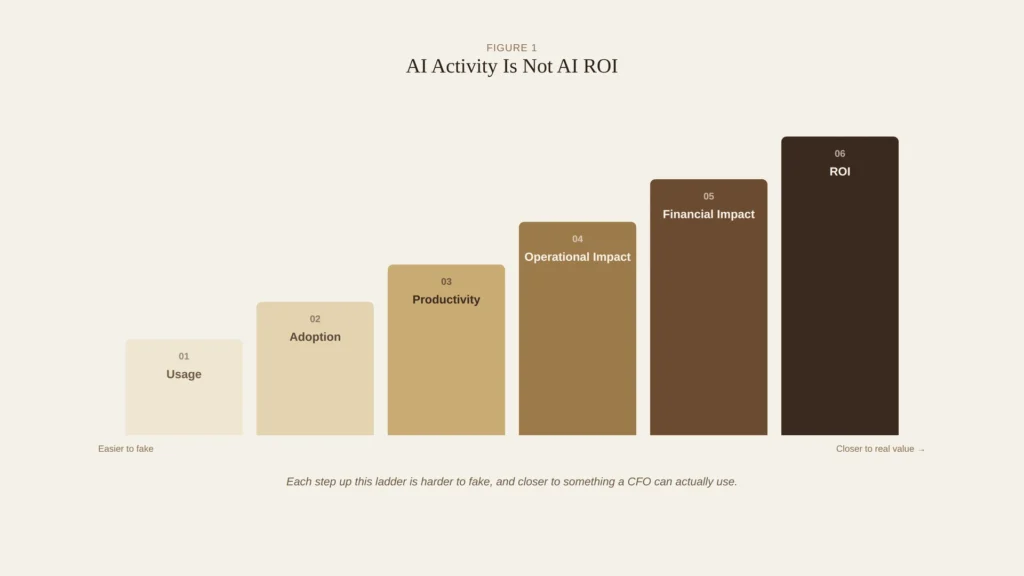
Figure 1 Each step up this ladder is harder to fake, and closer to something a CFO can actually use.
The Four Ways AI Creates Economic Value
It helps to have a fixed vocabulary for where value actually comes from, because “money saved from AI” is too narrow a frame and leads people to either force every use case into a savings story or dismiss use cases that don’t produce one.
Realistically, AI creates value through some combination of four channels.
Revenue creation. AI that helps close deals faster, personalize an offer, or expand what a sales or marketing team can cover. This is the most visible category and the one executives instinctively reach for but it’s also the hardest to attribute cleanly, since revenue has many causes.
Cost reduction. AI that lets the same output get produced for less fewer vendor hours, less overtime, lower cost per resolved ticket. This is usually the easiest category to measure, because the baseline cost was probably already being tracked.
Capacity creation. AI that lets existing headcount take on more work without adding people handling growth without proportional hiring. This is often the largest source of value in practice and the easiest to under-report, because nothing visibly changed except that a hire that would have been necessary wasn’t.
Risk reduction. AI that catches errors earlier, responds to incidents faster, or improves compliance consistency. Harder to put a precise number on, but real and often the actual justification in regulated industries, even when it’s not the one written on the business case.
Not every use case needs to hit all four, or even more than one. A knowledge-search tool that mainly creates capacity doesn’t need a revenue story bolted on to justify itself. The mistake isn’t picking one category. It’s picking none running an initiative for a year without ever stating, in writing, which of these four channels it was supposed to move.
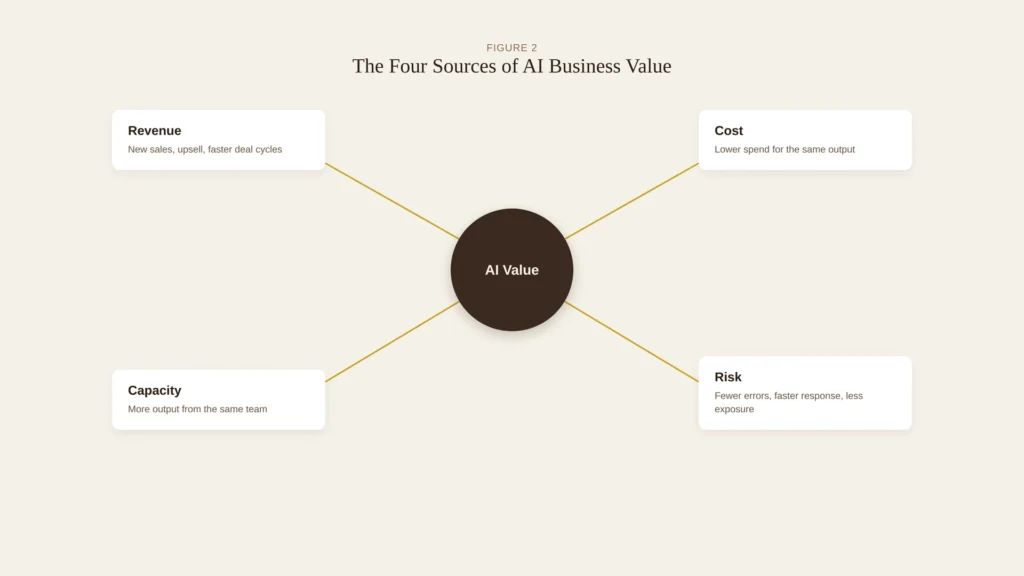
Figure 2 Not every use case needs to touch revenue. Most real ROI comes from the other three.
The Hidden Cost of an AI Initiative
The other half of any honest ROI calculation is cost, and this is where most business cases quietly understate reality. The number that gets budgeted is usually the model or software line API usage, seat licenses, platform fees. The number that actually determines whether the initiative pays for itself is everything built around that line.
A fuller accounting includes integration work to connect the AI system to the tools people already use; data preparation, which is very often the largest hidden line item, since most enterprise data isn’t clean or structured enough to use as-is; implementation and workflow redesign, the actual engineering and process work of making the tool fit how the job gets done; training and change management, teaching people not just which buttons to press but what to stop doing; governance and compliance, the policy, audit, and legal review that any system touching customer or employee data now requires; human oversight, the ongoing review and correction work that responsible deployment requires, which doesn’t disappear it moves; and maintenance and monitoring, the continuing cost of keeping a system accurate as prompts, models, and the business itself change underneath it.
Call the sum of all of it the Total Cost of AI Ownership. The license fee is the cost that shows up on a vendor invoice. The rest is the cost that shows up in engineering time, legal review, manager hours, and the slow accumulation of “we’ll fix that later” technical debt and it is very often larger than the invoice.
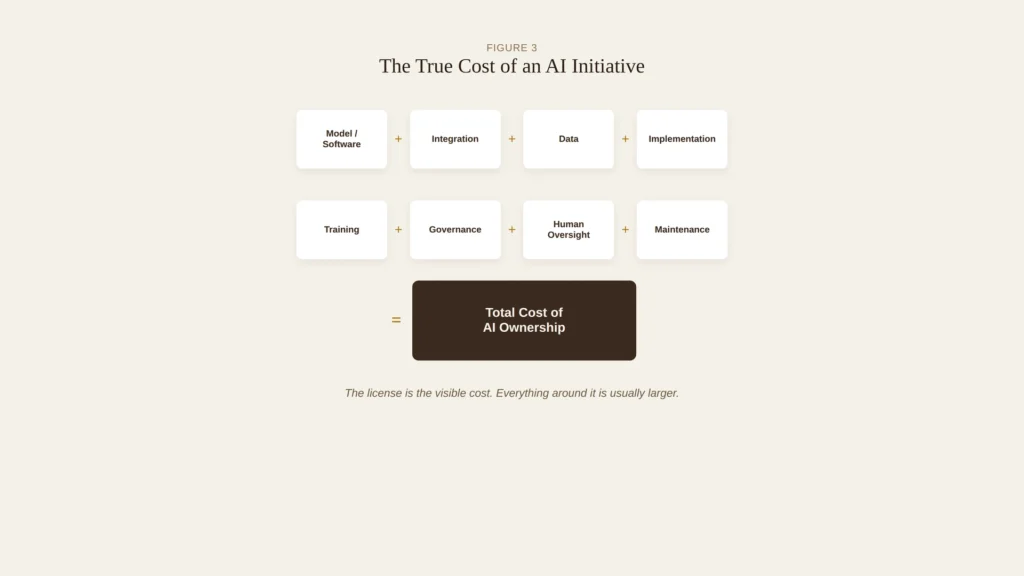
Figure 3 The license is the visible cost. Everything around it is usually larger.
The AI ROI Equation
With both sides defined, the calculation itself is simple to state:
AI ROI = (Net Business Value − Total Cost of AI Ownership) ÷ Total Cost of AI Ownership
The formula is the easy part. The discipline is in how honestly each side gets filled in.
Net business value should separate hard savings a headcount reduction, a canceled vendor contract, a measurable cycle-time improvement with a known dollar value per hour from soft savings, which are directionally real but harder to defend under scrutiny, like “improved employee satisfaction” or “faster onboarding” without a connected financial consequence. Revenue impact needs its own honesty check: did the AI system contribute to a deal, or did it happen to be present while a human did the actual selling? Capacity value work absorbed without new hires is legitimate value but needs to be estimated against a real counterfactual: what would headcount have had to become without this system, given the growth the business is already planning for? Risk-adjusted value is the least precise category and the one worth being most conservative about; a reasonable approach prices it as an expected value probability of an incident times its likely cost rather than as a specific realized saving.
Total Cost of AI Ownership should be built from the categories in the previous section, ideally amortized over a realistic useful life rather than dumped entirely into year one, the same way any other capital-ish investment would be treated.
A project with a small positive numerator and an honestly large denominator is a real result. A project that only looks good because the denominator excluded governance, training, and human review is a business case waiting to be challenged in the next budget cycle.
Stop Counting Hours. Start Measuring Outcomes.
Of all the metrics that circulate in AI reporting, “hours saved” deserves the most scrutiny, because it sounds financial without actually being financial.
Say an AI system saves the equivalent of 10,000 employee hours a year. That is a real number, and it is not, on its own, a savings of the fully loaded cost of those hours. The entire question is what happened to the time.
If the roles tied to those hours were eliminated, the savings are real and can be booked. If the people freed up were reassigned to higher-value work that itself produces measurable output more deals worked, more tickets resolved, more code shipped the value is real but shows up somewhere else in the P&L, and needs to be traced there rather than double-counted as “hours saved.” If the time was absorbed into work that was already discretionary slightly less rushed afternoons, marginally more thorough reviews there may be a real quality benefit, but it is not a cost saving, and reporting it as one overstates the case. And if the freed time simply wasn’t reallocated at all, the honest entry is zero, however uncomfortable that is to put in a slide.
None of those four outcomes are wrong to have happened. What’s wrong is reporting all of them under the same “hours saved” banner as though they were financially equivalent. A credible AI ROI report distinguishes them explicitly.
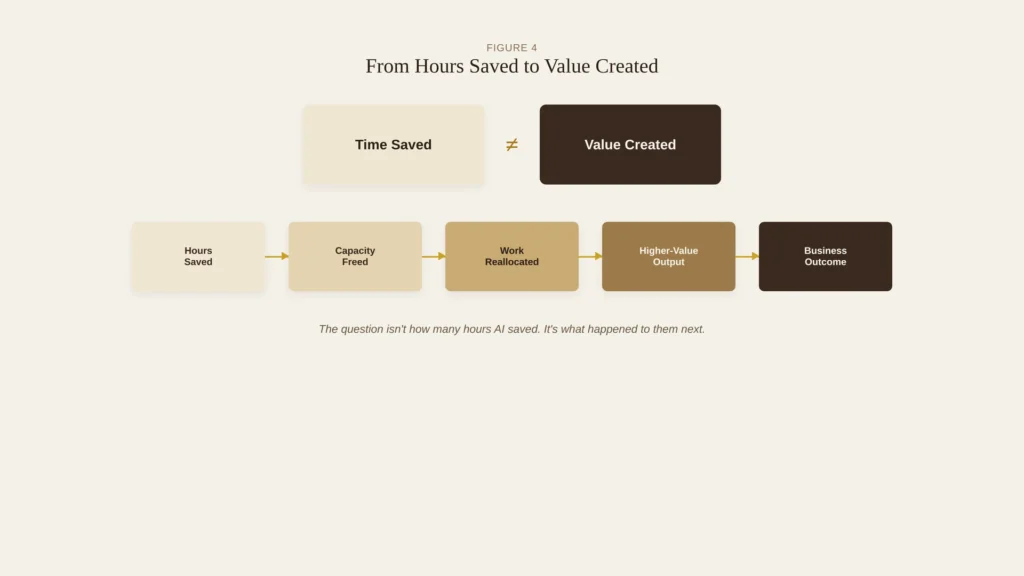
Figure 4 The question isn’t how many hours AI saved. It’s what happened to them next.
A CFO’s AI Scorecard
A useful scorecard resists the urge to reduce everything to one number. It organizes measurement into a small number of categories, each answering a question a different stakeholder actually asks.
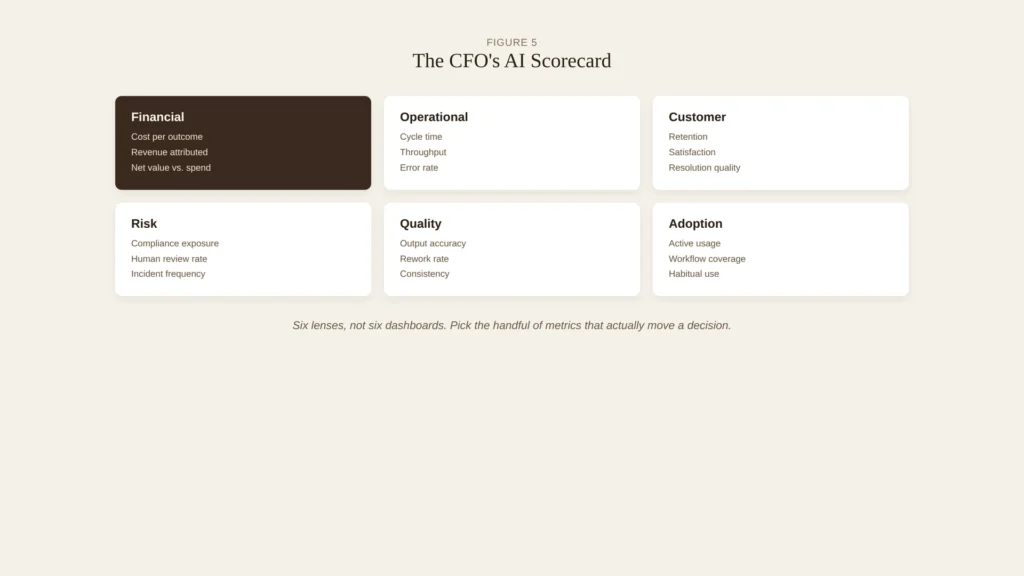
Figure 5 Six lenses, not six dashboards. Pick the handful of metrics that actually move a decision.
| Category | What It Measures | Why It Matters to a CFO |
|---|---|---|
| Financial | Cost per outcome, revenue attributed, net value versus spend | The category that ultimately decides whether the initiative gets renewed |
| Operational | Cycle time, throughput, error rate | Leading indicators that a financial result is coming, before it shows up in the ledger |
| Customer | Retention, satisfaction, resolution quality | Connects AI investment to churn and lifetime value, not just internal efficiency |
| Risk | Compliance exposure, human review rate, incident frequency | Where a cheap-looking initiative can become an expensive one very quickly |
| Quality | Output accuracy, rework rate, consistency | Distinguishes real productivity from work that looks fast but creates cleanup later |
| Adoption | Active usage, workflow coverage, habitual use | A precondition for value, not evidence of it useful context, not the headline |
The point of organizing metrics this way isn’t to track all eighteen every quarter. It’s to make a deliberate choice about which two or three, per category, actually change a decision and to stop reporting the ones that don’t.
Measure AI Differently at Each Stage
A second common failure is applying one fixed scorecard to an initiative at every stage of its life, which either kills promising early work for not yet having financial results, or lets mature initiatives coast indefinitely on “promising signs.”
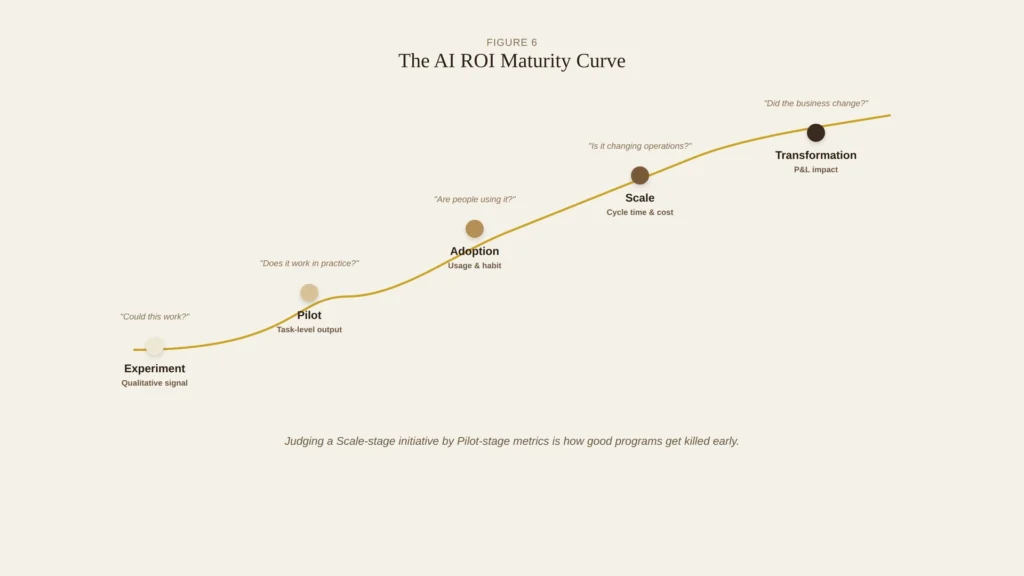
Figure 6 Judging a Scale-stage initiative by Pilot-stage metrics is how good programs get killed early.
At the Experiment stage, the right question is simply whether the idea is worth pursuing further, and the right evidence is qualitative does this look like it could work. At the Pilot stage, the question becomes whether it works in practice, measured by task-level output: did the AI actually produce a usable result on real inputs. At Adoption, the question shifts to whether people are actually using it, tracked through usage and habit formation the first point where a low number is a genuine warning sign rather than expected friction. At Scale, the question becomes whether the initiative is changing operations, measured by cycle time and cost, the metrics operational managers already track. And at Transformation, the only question that matters is whether the business changed, evidenced by P&L impact the standard the earlier stages were never meant to be held to.
This progression connects directly to a persistent operational reality: a large share of enterprise AI initiatives never make it past the pilot stage at all, which is a separate but related problem from measurement.
Three AI ROI Examples
The following are illustrative, hypothetical scenarios built to show the mechanics of the framework not case studies, and not benchmarks to expect from your own deployment. Real results vary enormously by industry, data quality, and execution.
Example 1: Customer Support
Current workflow: A support team of 40 agents handles roughly 60,000 tickets a month, with average resolution time driving both cost and customer satisfaction.
AI intervention: An AI triage and draft-response layer classifies incoming tickets and drafts first responses for agents to review and send.
Costs (hypothetical): Software and model usage, integration with the existing helpdesk platform, a data-cleanup phase for historical tickets, and an ongoing human-review allowance for a defined share of AI-drafted responses.
Measured outcome (hypothetical): Average handle time drops meaningfully; a portion of low-complexity tickets resolve without an agent touching them at all; customer satisfaction on AI-assisted tickets holds steady rather than declining.
Financial impact (hypothetical): Capacity freed is redeployed to reduce a planned new hire for the coming year, converting a cost-avoidance figure into a defensible number finance can use.
ROI calculation: Net value (the avoided hiring cost, plus a smaller quality-linked retention benefit) minus total cost of ownership (software, integration, data cleanup, ongoing review time), expressed as a ratio against that cost the same structure as the general equation above, populated with this team’s real numbers.
Example 2: Marketing and Content Operations
Current workflow: A content team produces long-form and campaign material through a multi-stage draft-review-approve cycle that takes days per piece.
AI intervention: AI-assisted drafting and research compression shortens the first-draft stage, with human editors still owning structure, accuracy, and voice.
Costs (hypothetical): Tooling cost, brand-voice and style calibration work, an editorial review overhead specific to AI-assisted drafts, and training time for the writing team.
Measured outcome (hypothetical): Cycle time from brief to publishable draft shortens; output volume per writer increases without a corresponding increase in published errors.
Financial impact (hypothetical): More campaigns ship inside the same planning window, which is a capacity story rather than a headcount-reduction story valued as the marginal revenue attributable to the additional campaigns actually run.
ROI calculation: Net value tied to incremental campaign output and its attributed revenue contribution, weighed against tooling, calibration, and review costs with soft benefits like “less writer burnout” tracked separately and not folded into the financial figure.
Example 3: Enterprise Knowledge and Search
Current workflow: Employees lose meaningful time each week searching across scattered internal systems for policies, prior decisions, and technical documentation.
AI intervention: A retrieval-augmented internal search and question-answering system indexes internal documentation and returns sourced answers.
Costs (hypothetical): Indexing and retrieval infrastructure, ongoing data governance to keep sensitive documents appropriately scoped, and a maintenance budget to keep the index current as documentation changes.
Measured outcome (hypothetical): Average time-to-answer for internal knowledge questions drops; fewer duplicate questions land in specialist teams’ queues.
Financial impact (hypothetical): Modeled as capacity value time returned to employees, multiplied by a conservative share assumed to convert into productive output, since this use case has no natural revenue or headcount story attached.
ROI calculation: This is the category where the article’s earlier warning about hours saved applies most directly the business case has to state explicitly what share of freed time is assumed to convert to value, and defend that assumption, rather than reporting gross time saved as if it were money.
When AI Has a Negative ROI
Not every AI initiative should survive contact with this framework, and a healthy program kills some of its own projects.
Warning signs worth taking seriously: the problem being solved was never expensive or frequent enough to justify the investment, however impressive the demo looked. Integration cost turned out to exceed the value of the workflow being improved common when AI gets bolted onto a legacy system that resists connection. Usage never materialized past the pilot team, which usually means the tool solved a problem nobody outside the pilot actually had. The underlying data was too inconsistent for the system to be trustworthy, producing outputs that looked plausible but required as much verification as doing the work manually. Human review overhead ended up larger than the labor the system was meant to save, which happens more often with generative systems than most business cases admit upfront. Ownership was never assigned to a specific person accountable for the outcome, so the initiative drifted without anyone empowered to fix or kill it. The model or API cost scaled with usage in a way nobody modeled, turning a cheap pilot into an expensive production system. And the workflow the AI was inserted into was more complex than anyone mapped out beforehand, so the system solved a simplified version of the problem instead of the real one.
None of this is an argument against AI. It’s an argument against sunk-cost momentum. The organizations getting real value from AI are not the ones running the most pilots they’re the ones willing to end the pilots that this framework says aren’t working.
The AI Business Case CFOs Actually Need
Before approving an AI initiative, a complete business case should be able to answer the following, in writing, not just in a slide deck:
- Problem what specific, costed problem is this solving?
- Baseline what does the current state cost, in time or money, today?
- AI intervention what, specifically, will the system do?
- Expected value which of the four value channels does this affect, and by how much?
- Implementation cost the full Total Cost of AI Ownership build, not just the license
- Ongoing cost what does this cost to run and govern in year two, not just year one?
- Risk what happens if the system is wrong, and how often is that tolerable?
- Measurement method exactly which metric, tracked by whom, proves this worked?
- Time to value realistically, when does a financial number appear?
- Owner one named person accountable for the outcome, not a team
- Success criteria the specific number that means this should continue
- Decision threshold the specific number that means this should stop
A business case that can’t fill in the last two rows honestly is not ready for approval, regardless of how compelling the demo was.
What Changes When AI Becomes Agentic?
Traditional generative AI measurement can mostly stay close to the model: input goes in, output comes out, and the output can be judged directly against a baseline. Agentic systems break that simplicity, because the unit of work is no longer a single response.
An agentic workflow looks more like: a goal is set, the system plans a sequence of steps, it calls tools and takes actions across systems, it receives feedback from the environment, and it arrives at an outcome often after a chain of intermediate decisions no one explicitly reviewed. Measuring only the first model call in that chain says almost nothing about whether the eventual outcome was good, fast, or cheap.
That pushes measurement up a level, from model calls to workflows. The relevant question is no longer “how good was this individual response” but “how often did this workflow reach a correct, useful outcome, and at what total cost across every step and tool call it took to get there.” That includes the cost of steps that failed and had to be retried, the cost of any human intervention needed to correct course mid-workflow, and the cost of tool and API calls that don’t show up in a single, clean invoice the way a chat subscription does.
Practically, this means AI ROI measurement for agentic systems needs to be anchored to completed outcomes a resolved case, a shipped report, a closed workflow rather than to any single step inside them, with cost tracked at the same outcome level rather than per call.
The Metrics That Will Matter Most
Some of the metrics organizations will need are already in use today, even if inconsistently. Others are still emerging as agentic and enterprise-scale AI systems mature, and a few remain more speculative directionally sensible, but without an established measurement standard yet.
Established today: cost per resolved outcome, cycle-time reduction, error and rework rate, and revenue attributed to a specific AI-assisted workflow.
Emerging: human capacity unlocked (tracked as a distinct line from “hours saved”), cost per successful autonomous action for agentic systems, and customer retention impact specifically attributable to AI-assisted service.
Still speculative: something like an “AI contribution margin” a standardized way of expressing an AI system’s net contribution the way a product line’s contribution margin is expressed today. Directionally sensible, but no consistent methodology for it exists across organizations yet, and claims using this kind of language should be treated as an internal modeling choice, not an industry benchmark.
The Bottom Line
Every framework in this article reduces to one discipline: refusing to let activity stand in for outcome. A dashboard full of usage charts is not evidence that anything changed. A number a CFO can trace, line by line, back to a cost that went down or a revenue figure that went up that’s evidence.
The organizations pulling ahead with AI are not the ones running the most pilots or reporting the highest adoption. They’re the ones that stopped asking how much AI they’re using, and started asking, project by project, what actually changed because they used it.
Next Steps
- Pick one live AI initiative and try to fill in every row of the business case template above, honestly. Blank rows are your priority list.
- Separate any “hours saved” figure currently in circulation into its four possible fates eliminated, reassigned, absorbed, or unused and report each separately.
- Build a full Total Cost of AI Ownership figure for your largest initiative, including governance, training, and human review not just the license.
- Match each active initiative to its actual maturity stage, and stop judging Pilot-stage work by Scale-stage metrics.
- Set an explicit decision threshold, in writing, for every initiative currently running without one.
