
SEO Isn’t DeadBut GEO Is the New Front Door

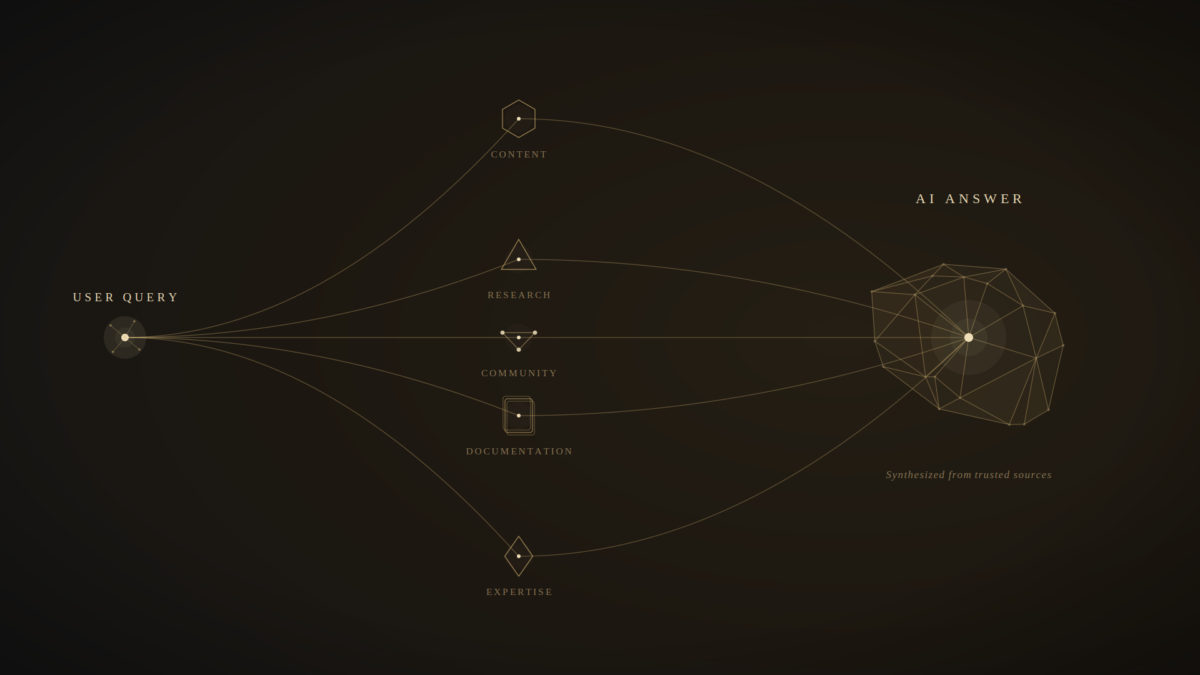
What Is GEO (Generative Engine Optimization)? Complete Guide 2026
For twenty years, the front door to the internet was a search results page. You typed a question, you got ten blue links, and you clicked the one that looked most trustworthy.
That front door is quietly being replaced.
Ask a question in ChatGPT, Perplexity, or Google’s AI Overview today and you don’t get ten links you get an answer, built by pulling from a handful of sources the model decided to trust. Most people never click through to see where that answer came from. They just read it and move on.
If your content isn’t one of the sources the model chose, you don’t just rank lower. You don’t exist in that answer at all.
That’s the shift GEOGenerative Engine Optimization is built to address. It’s not a replacement for SEO. It’s a new, parallel discipline for earning a place in an answer instead of a spot on a page.
In this guide, we cover everything you need to know about GEO:
- How it’s different from traditional SEO
- How generative engines actually decide what to cite
- Real-world examples of content that gets cited (and content that doesn’t)
- A framework for optimizing your content for AI engines
- Common mistakes
- How to measure whether it’s working
- Where this is headed next
What Is GEO?
Generative Engine Optimization is the practice of structuring and positioning content so that AI systems/chatbots, AI search overviews, and answer engines select it as a source when generating a response.
Traditional SEO optimizes for ranking: getting your page as high as possible on a results page a human will scroll through. GEO optimizes for citation: getting your content selected as one of the handful of sources an AI model synthesizes into a single answer.
The two overlap more than they conflict. Good SEO fundamentals, clear structure, real expertise, fast pages still matter for GEO. But ranking well on Google no longer guarantees you’ll be cited by an AI engine, and the reverse is also true. A meaningful share of the sources AI engines cite don’t rank in the traditional top results for the same query at all. Ranking and citation have become two separate games, and you now have to play both.
How Generative Engines Actually Decide What to Cite
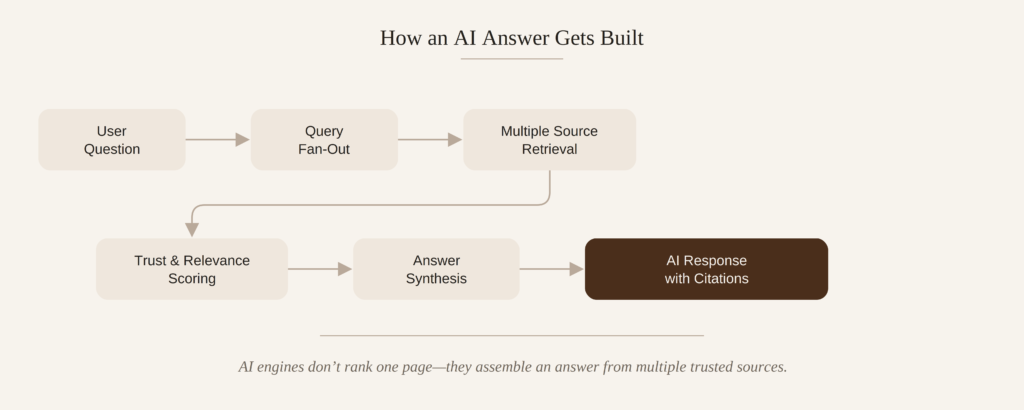
Understanding GEO starts with understanding what happens between a user’s question and the answer they see.
Step 1: The query gets broken apart A generative engine rarely treats your question as a single search. It splits it into sub-questions that is often called query fan-out. “Best CRM for a 10-person startup” might silently become five separate lookups: pricing, integrations, ease of setup, scalability, and user reviews.
Step 2: Each sub-query pulls from different sources The engine searches or retrieves content for each piece separately. This is why a single article rarely dominates an entire AI answer; it usually needs to win just one sub-topic to get cited at all.
Step 3: Sources get scored for relevance and trust Structure, clarity, and how directly a passage answers a specific sub-question all factor in. So does the domain’s broader signal of authority how often it’s mentioned elsewhere, not just how it’s linked to.
Step 4: A handful of sources get synthesized into one answer The model doesn’t quote you at length. It paraphrases the clearest, most directly relevant passages it found and blends them into a single response, often citing two to five sources total.
Step 5: The user reads the answer and rarely clicks through This is the part that changes the incentive structure entirely. Being cited doesn’t reliably send you traffic the way ranking #1 used to. It sends you something different: brand visibility inside an answer, when someone does click through often a much higher-intent visitor.
Real-World Use Cases
Use Case 1: The B2B Software Company
A mid-sized project management tool ranks page two on Google for “best project management software for agencies”decent, but not front-page. Their blog post, though, answers the query in the first 150 words with a clear, direct summary, followed by a structured comparison table.
When someone asks an AI assistant the same question, the model’s query fan-out includes a sub-question like “which tools work best for agency billing.” That specific section of the postclearly labeled, directly answered gets pulled into the AI’s response, even though the full article doesn’t rank in Google’s top 10.
The company gets cited by name in the AI answer. No click. But their brand shows up as a recommended option to someone actively evaluating tools arguably more valuable than a ranking they’d never see.
Use Case 2: The Independent Analyst
A solo industry analyst writes a detailed breakdown of a market trend, publishes it on a personal blog with modest domain authority, and it never cracks Google’s first page for the head-term keyword.
But it gets picked up and discussed on Reddit and referenced in a YouTube video. Those secondary mentionsnot backlinks in the SEO sensebecome signals of authority that a generative engine picks up on when synthesizing an answer about that trend. The analyst’s original framing ends up paraphrased in an AI Overview, driving a wave of direct site visits from people who saw the citation and searched for the analyst by name.
SEO vs. GEO: Side by Side
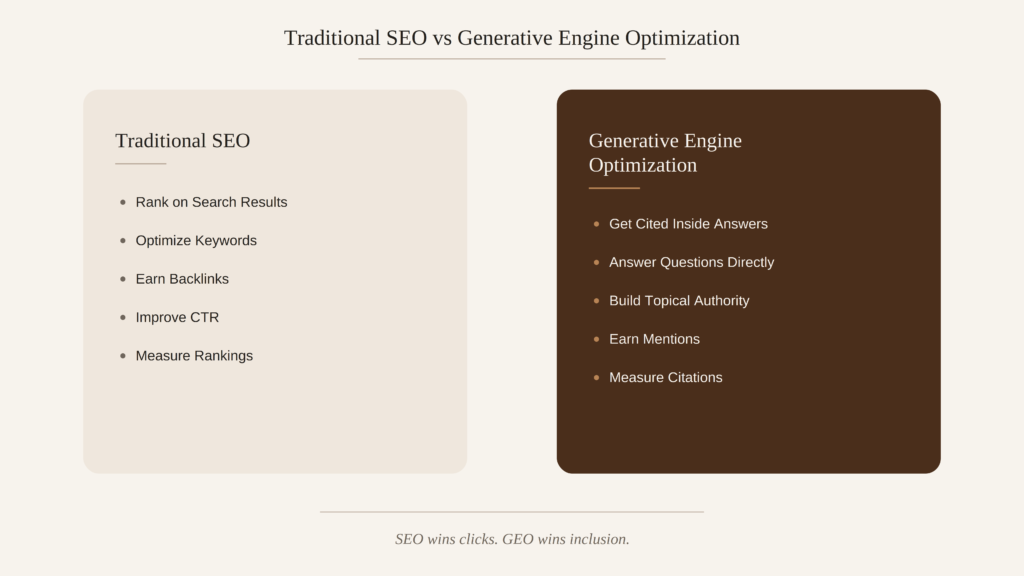
SEO wins clicks. GEO wins inclusion.
The two aren’t in competition. A page that’s well-structured for GEO is usually still solid for SEO. But optimizing purely for the old rulesbacklinks and keyword densityincreasingly misses the new front door entirely.
A Framework for Getting Cited
1. Answer the query in the first 150 words Don’t build up to the answer. State it directly, then expand. Engines and readers both reward this.
2. Structure content around sub-questions, not just the head keyword If your topic could reasonably fan out into five related questions, give each one its own clearly labeled section.
3. Add one piece of original data, framework, or commentary Paraphrased aggregation of what’s already out there rarely gets cited over a source with something distinct to say.
4. Fix the technical basics Add relevant schema markup. Confirm AI crawlers aren’t blocked in robots.txt. Consider an llms.txt file summarizing your site for models that support it.
5. Build mentions, not just links Show up in the discussions AI engines already trustReddit threads, YouTube explainers, Wikipedia where relevant.
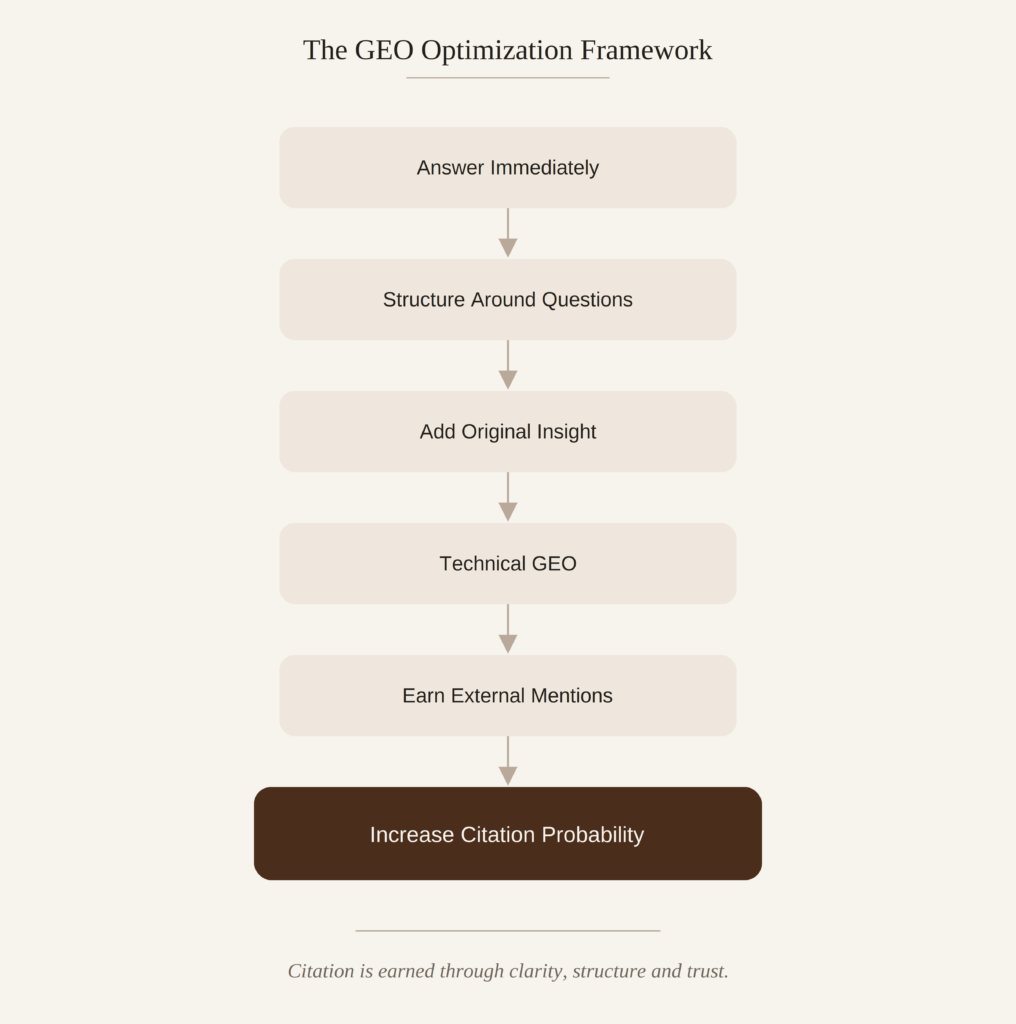
Citation is earned through clarity, structure and trust.
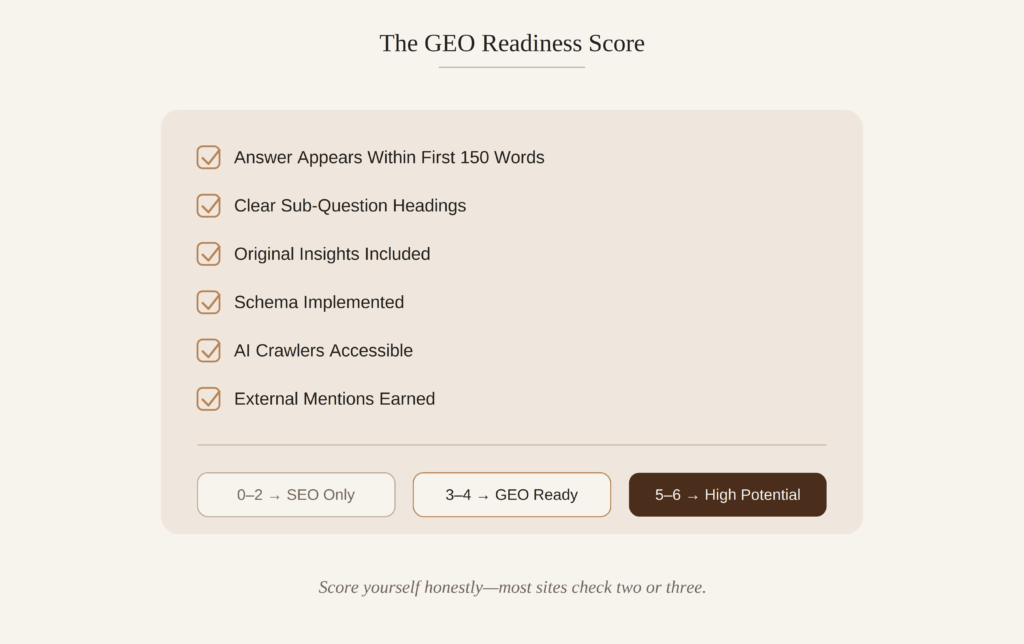
Quick GEO Checklist
- The query is answered directly within the first 150 words
- Content is broken into clearly labeled sections matching likely sub-questions
- At least one original data point, stat, or framework is included
- Schema markup (Article, FAQ, or HowTo) is implemented
- AI crawlers are confirmed unblocked in robots.txt
- The topic has supporting mentions somewhere off-site (Reddit, YouTube, forums)
Checking two or three: you’re set up for traditional SEO only. Five or six: you’re actually playing the GEO game.
Who Needs to Care About This
Content and SEO Teams Your existing workflow needs a second success metric alongside rankingscitation frequencyor you’ll keep optimizing for a front door fewer people are using.
Product Marketers If your buyers are researching via AI assistants before ever visiting your site, your first brand impression is now a paraphrased sentence in someone else’s interface, not your homepage.
Founders and Solo Creators GEO narrows the domain-authority advantage bigger competitors havea smaller site with a genuinely direct, well-structured answer can out-cite a much bigger one that buries the answer on page three of a listicle.
Analytics and Growth Teams Standard traffic dashboards won’t show you AI citations. You need a deliberate way to track share of voice and AI-referred visits, or you’ll systematically undercount your own visibility.
Common Mistakes
Mistake 1: Writing to build suspense instead of answering fast. Classic blog structurehook, backstory, and the answer at paragraph tenis exactly what gets skipped by both readers and engines. Lead with the answer.
Mistake 2: Treating GEO as a rebrand of old SEO tactics. Keyword stuffing and backlink schemes don’t translate. Generative engines reward clarity and direct relevance, not density.
Mistake 3: Ignoring off-site mentions. Obsessing over your own domain’s content while ignoring how you’re discussed elsewhere leaves out a major input to how engines judge your authority.
Mistake 4: Measuring only traditional traffic. If you’re not tracking citation frequency or AI-referred visits separately, you can look like you’re losing ground on paper while actually gaining visibility in AI answers.
Mistake 5: Blocking AI crawlers by accident. A robots.txt file written years ago for a different purpose can silently exclude your entire site from the engines that now matter most. Check it.
Where This Is Headed
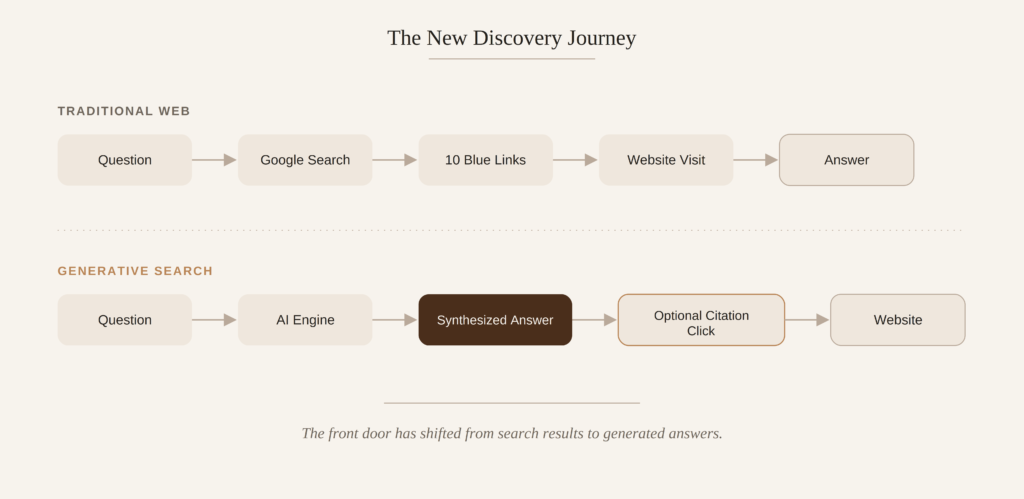
The front door has shifted from search results to generated answers.
Zero-click becomes the default, not the exception. More queries will be fully answered inside the AI interface itself, with the underlying source never visited directly.
Citation tracking becomes a standard analytics category. Expect citation frequency and AI share-of-voice to become as standard in reporting as organic rankings are today.
Brand mentions matter as much as backlinks. Off-site discussionReddit, YouTube, community forumsbecomes a first-class ranking input for generative engines, not a nice-to-have.
One-click scheduling and action move inside the answer itself. As engines integrate directly with booking, purchasing, and scheduling tools, the “front door” stops being a link at allit becomes the action completing inside the AI interface.
Frequently Asked Questions
Is GEO replacing SEO?
No. GEO is a parallel discipline. Traditional search still drives significant traffic, and many SEO fundamentalsclarity, structure, real expertisehelp both. But optimizing only for classic ranking factors increasingly misses how AI engines choose sources.
Does ranking well on Google guarantee AI citation?
No. A meaningful share of sources cited by generative engines don’t appear in the traditional top results for the same query, and vice versa. They’re related but distinct signals.
What’s the fastest GEO win for an existing blog?
Restructure your introduction so the query is directly answered in the first 150 words, and add clear subheadings that match likely sub-questions. This alone often improves citation odds without writing anything new.
How do I measure whether GEO is working?
Track citation frequency (how often you appear in AI answers for target queries), AI-referred traffic in your analytics, andwhere availablesentiment in how you’re described.
Do I need an llms.txt file?
It’s optional but low-effort. It gives models that support it a clear summary of your site, similar in spirit to a sitemap, and costs little to add.
Does off-site content like Reddit posts actually help GEO?
Yes. Generative engines lean heavily on community discussion platforms as trust signals, independent of whether those posts link back to your site.
